

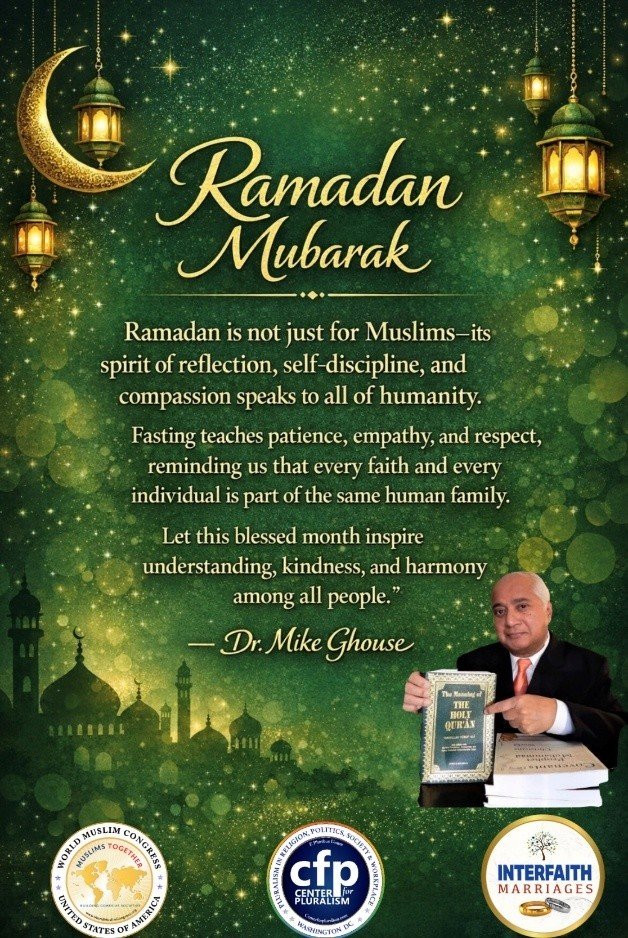
Ramadan Mubarak: Why This Greeting Matters
“Ramadan Mubarak.” “Ramadan Kareem,”
It all means, “May Ramadan be blessed for you.”
But behind those two words lies a month of discipline, empathy, family bonding, spiritual awakening, community building, and social responsibility.
As 2026 unfolds in a world marked by political tension, digital overload, economic stress, and social fragmentation, Ramadan offers something deeply needed: moral recalibration, it is time to reboot our heart, mind and soul.
This article, Non-Muslim’s Ramadan is an invitation to understand fellow Americans who are Muslims.
The Universal Idea of One Creator
Across civilizations, humanity has wrestled with the same question: Who brought this universe into existence?
There is a Cause — a Causer— who creates, sustains and recycles existence. Different faiths use different names, but there cannot be multiple causes or creators for one universe.
(Quran 55:1-13) The sun rises on schedule. The earth rotates without fail. The planets maintain their course. The plants grow and deliver fruits, grains and shade. The organs in human body work together cohesively for us to function normally.
Matter follows its programming.
The only aspect that the creator, or God, did not program is our interactions with one another. We are granted freedom, which can foster harmony among individuals, families, and nations. However, this same freedom can also lead to conflicts and wars among families and nations.
What does God desire? He created everything in harmony and expects us to cultivate harmony within ourselves and with others. That is all He asks.
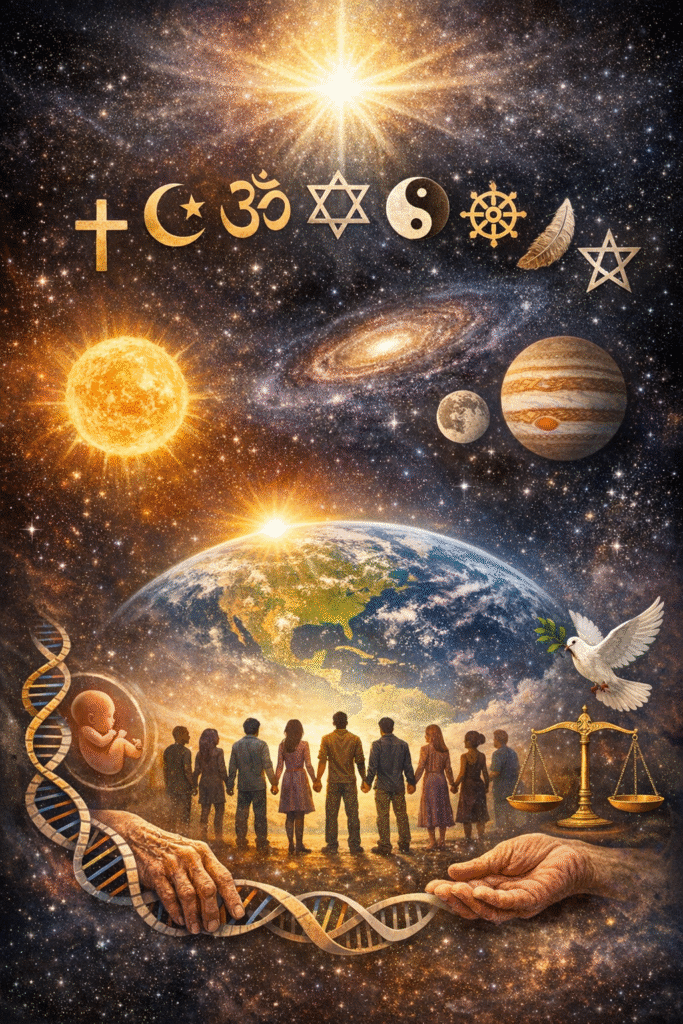
Are We Really That Different?
From the union of sperm and egg until death, the human biological process remains the same. There are no genes specific to Christians, Jews, Muslims, Hindus, Sikhs, or any other group.
What differs is belief and behavior.
Ramadan addresses behavior.
What Is Ramadan and its significance
Ramadan is the ninth month of the Islamic lunar calendar.
In 2026, over a billion Muslims will fast from dawn to sunset for 29 or 30 days.
But why does it matter today?
Because modern life encourages excess — excess consumption, excess speech, and excess ego. It takes away our peace of mind and harmony.
Ramadan teaches restraint.
How Ramadan Begins: The Moon Sighting Debate
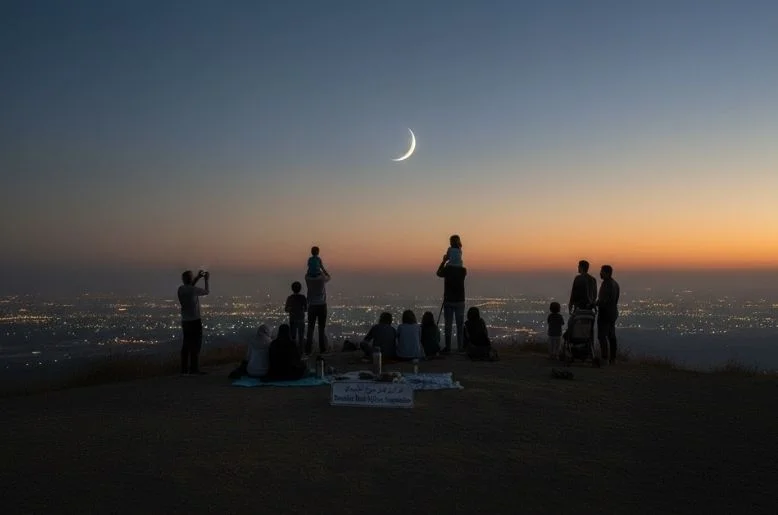
Ramadan begins with the sighting of the new crescent moon.
Here is where theology meets astronomy.
Some insist on physically sighting the moon. Others rely on astronomical calculations. In the United States, many communities consult NASA’s data for planning.
Yet, there is something timeless about scanning the horizon for that pencil-thin crescent.
Chandni Raat: The Night of Anticipation
When the moon is confirmed, celebration begins.
In South Asia, the evening is called Chand Raat — Moon Night.
Markets stay open late. Families shop for clothes. Children buzz with excitement.
It feels like Christmas Eve, Diwali night, or Rosh Hashanah anticipation.
A Day in Ramadan: A Spiritual Timeline
Let’s walk through a typical day. The times are approximate.
4:00 AM – Suhoor and Family Bonding
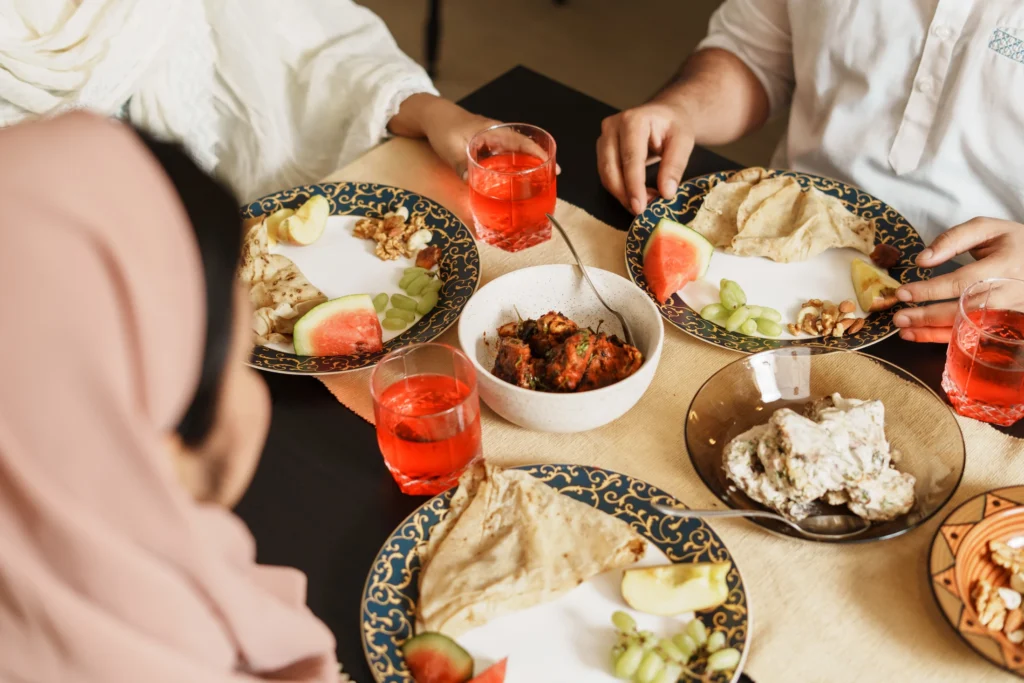
Before dawn, families gather for Suhoor (also called Sahri).
In my childhood home, it was teamwork. I chopped onions. My sister rolled rotis. My brothers took care of the other chores. My mother managed the stove. My father ensured every ingredient was present.
It was more than nutrition — it was connection.
5:30 AM – Dawn Prayer (Fajr)
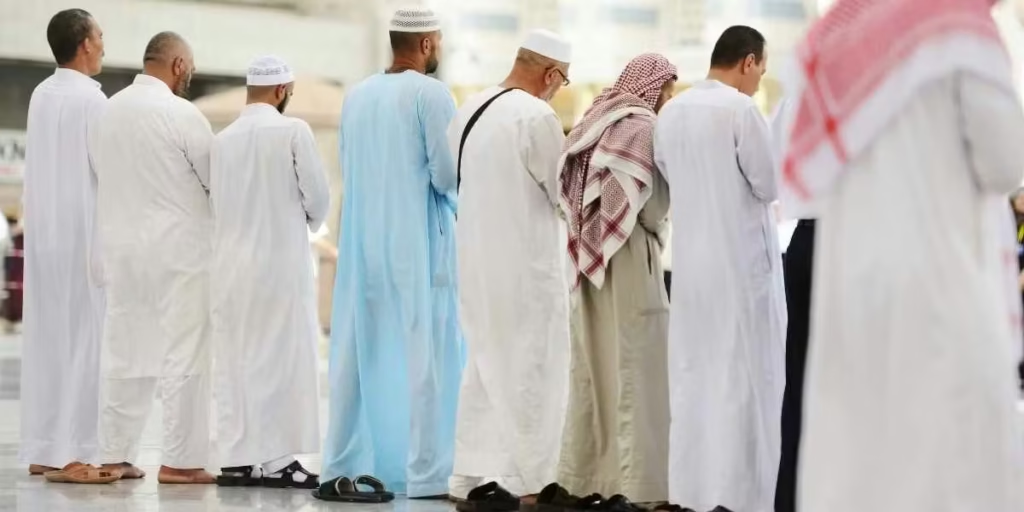
The fast begins at dawn.
Families pray together. Some head to the mosque.
Then, life continues — work, school, responsibilities.
1:30 PM – Dhuhr and Asr: Midday Mindfulness
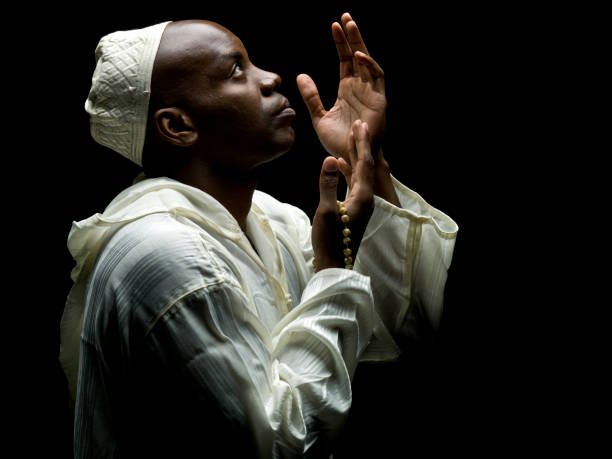
The midday prayer (Dhuhr) anchors the afternoon.
Later comes Asr, the late afternoon prayer.
Shia Muslims often combine the two. Sunnis and Ahmadis usually perform them separately.
These pauses throughout the day prevent spiritual drift.
It is yoga in action, bringing heart and soul together and rebooting our minds to be fresh and active and live consciously through the day.
7:30 PM Sunset – Iftar: Breaking the Fast
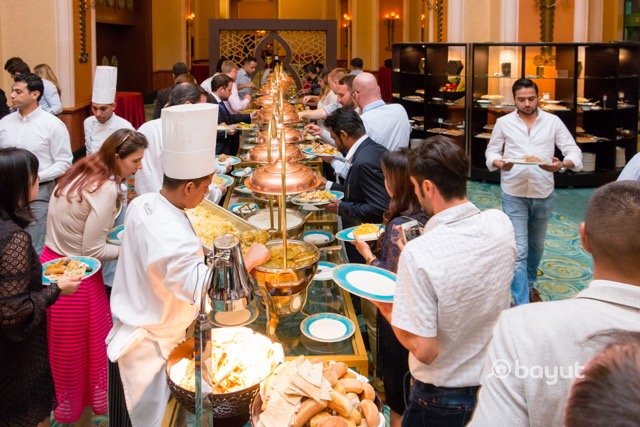
At sunset, the call to prayer (Azan) signals relief.
Most break the fast with dates and water.
The body has abstained from food, water, and indulgence for hours.
But fasting is more than hunger.
What Muslims Really Fast From
Muslims fast from:
- Food
- Water
- Negative speech
- Gossip
- Anger
- Arrogance
- Harmful behavior
- Ill will
The Prophet Muhammad ﷺ taught that God has no need for the hunger of someone who lies, slanders, or violates others’ rights.
The tongue must fast.
The eyes must fast.
The hands must fast.
The heart must fast.
That is the deeper Ramadan, at the end of the day, you feel a sense of pureness.
Taraweeh: The Nightly Spiritual Marathon
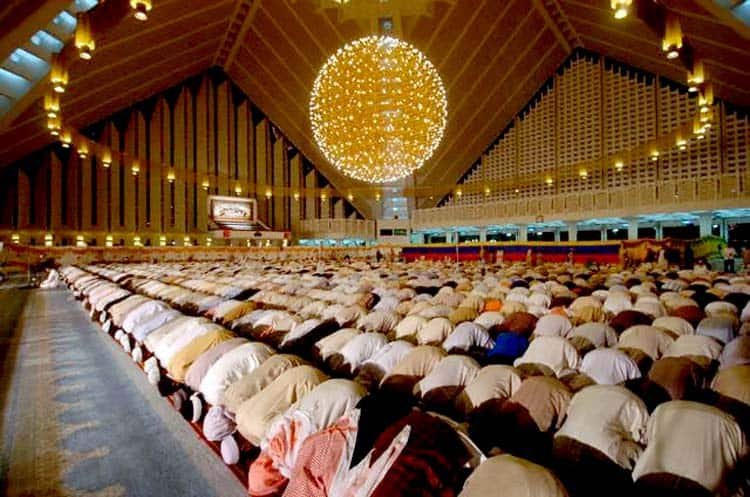
After the night prayer (Isha), Muslims gather for Taraweeh.
These are special Ramadan prayers performed in congregation.
Typically 20 rakats (Units) are offered, though some pray 8 rakats.
Over the month, the entire Qur’an is recited — one section each night.
Imagine standing in reflection for an hour or more every night for 30 days.
It is demanding.
It is beautiful.
It builds discipline.
Laylat al-Qadr: The Night of Power
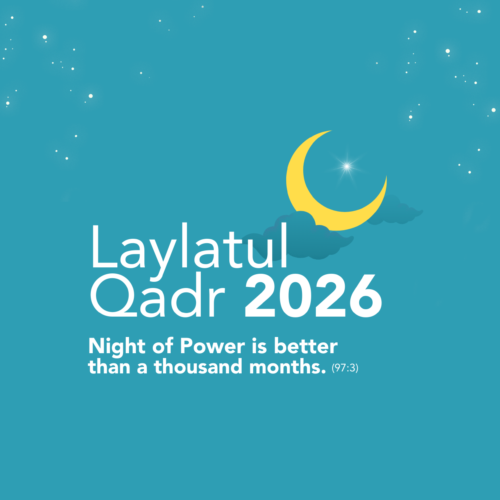
In the final ten nights comes Laylat al-Qadr.
It marks the first revelation of the Qur’an.
Many believe worship on this night is better than a thousand months. Meaning the entire Muslim community is purified and the combined energy bring peace and solace.
Shia Muslims emphasize the 19th, 21st, and 23rd nights. Sunnis and Ahmadis focus on the odd nights of the last ten days.
It is a night of deep prayer and tears.
Zakat: The 2.5% That Changes Lives
Every eligible Muslim gives 2.5% of accumulated wealth to the needy.
It uplifts the down trodden, mitigates the sense of guilt that we are well off and some are not. It reduces inequality and reminds the wealthy that their prosperity carries responsibility.
Many choose Ramadan to fulfill this obligation.
The Final Crescent: Chand Raat Returns
On the 28th, 29th or 30th night, eyes scan the sky again.
When the crescent appears, Ramadan ends.
Markets fill. Mehendi decorates hands. New clothes are prepared.
Joy replaces discipline — but the lessons remain.
Eid al-Fitr: A Celebration of Renewal
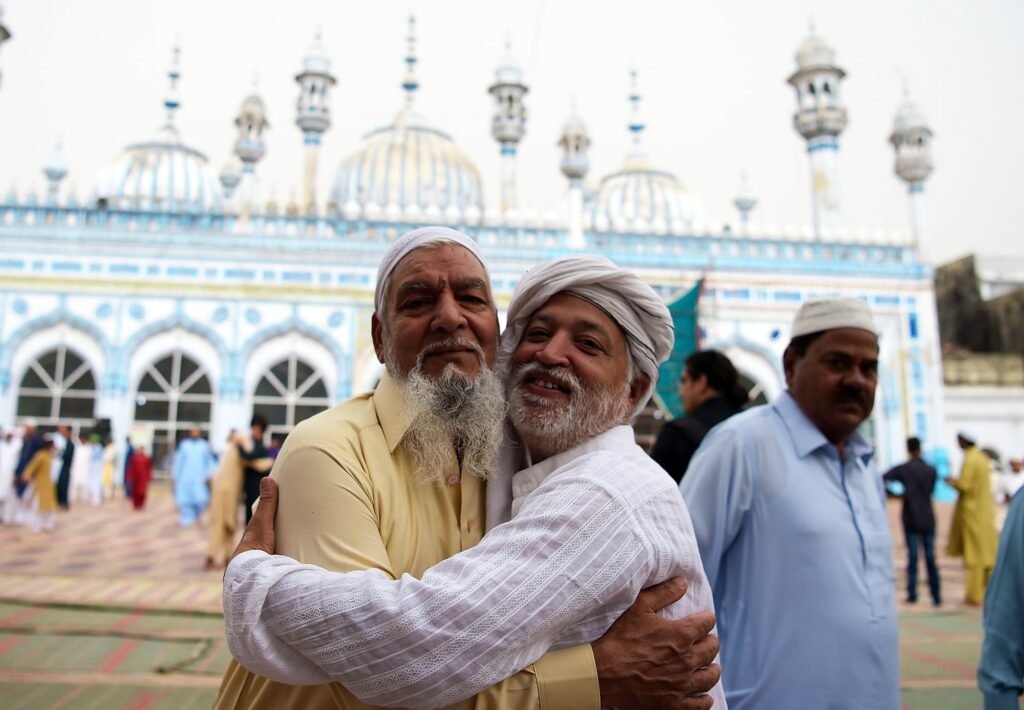
Eid morning begins with breakfast — breaking the month-long dawn-to-sunset pattern.
Then comes congregational prayer.
In cities like Dallas, convention centers host tens of thousands. In smaller towns, open grounds or cemetery spaces are used.
The Three Hugs Explained
After prayer, Muslims embrace three times:
Forgive me.
I forgive you.
Let us begin again.
Eidi and Childhood Joy
Children receive gifts — often money.
As a child, I once received one Anna. My friend and I bought orange soda. It felt like heaven.
Visiting the Cemetery
Many families visit graves of loved ones.
Remembrance brings peace.
There is always that connection between the loved ones.
Who Is Exempt from Fasting? The Ethical Depth of Exceptions
Islam exempts:
- The sick
- Diabetics
- Pregnant women
- Nursing mothers
- Travelers
- Those physically unable
Missed fasts may be made up later.
But the deeper teaching is moral.
If someone fasts yet harms others, their hunger holds no spiritual value.
Ramadan demands ethical transformation.
Ramadan Beyond Muslims: A Universal Invitation
Fasting exists in Christianity, Judaism, Hinduism, Buddhism, Jainism, Sikhism, and other traditions.
The experience of hunger produces empathy.
In 2026, amid global polarization, Ramadan reminds humanity of shared vulnerability.
If we have never felt hunger, how will we care for the hungry?
FAQs About Ramadan for Non-Muslims
1. Do Muslims not drink water all day?
Correct. From dawn to sunset, no food or water is consumed. Nothing goes into the mouth.
2. Do all Muslims fast?
Most do, except those exempt.
3. What is Taraweeh?
Special nightly Ramadan prayers where the Qur’an is recited in full over the month.
4. Why is moon sighting important?
Islam follows a lunar calendar, making physical moon sighting spiritually significant.
5. What is Zakat?
A mandatory 2.5% charitable contribution from accumulated wealth.
6. What is Eid?
The celebration marking the end of Ramadan.
Conclusion: Why Ramadan Still Matters in 2026
Ramadan disciplines appetite.
It purifies intention.
It strengthens families.
It builds empathy.
It redistributes wealth.
It encourages forgiveness.
In a fragmented world, its message is timeless:
Live consciously.
Care deeply.
Restrain the ego.
Serve humanity.
Ramadan Mubarak.
Thank you
Mike Ghouse
Latest articles about Mike Ghouse
A Lamp That Connects Hearts: Dr. Mike Mohamed Ghouse — A Radiant Journey of Love, Thought, and Service
https://thejagotimes.com/a-lamp-that-connects-hearts-dr-mike-muhammad-ghouse-a-radiant-journey-of-love-thought-and-service/
Mr. Pluralist of America Panorama https://www.theindianpanorama.news/profile/dr-mike-mohamed-ghouse-mr-pluralist-of-america/
Background of Dr. Mike Mohamed Ghouse
https://interfaithmarriages.org/muslim-background-of-dr-mike-mohamed-ghouse/
Dr. Ghouse is the President and founder of the Center for Pluralism and director of the World Muslim Congress. He is an Interfaith Wedding Officiant for InterfaithMarriages.org and a Muslim Wedding Officiant. He is a Muslim, Pluralist, activist, speaker, author, and social scientist. More on Google