
Why Choosing Love Across Faiths Demands More Strength, Not Less
When two people from different faiths decide to marry, the conversation around them often begins with what they will have to give up. Families worry about religious identity. Relatives question how children will be raised. The couple may be asked whose traditions will prevail, as though a shared future requires one person’s world to become smaller.
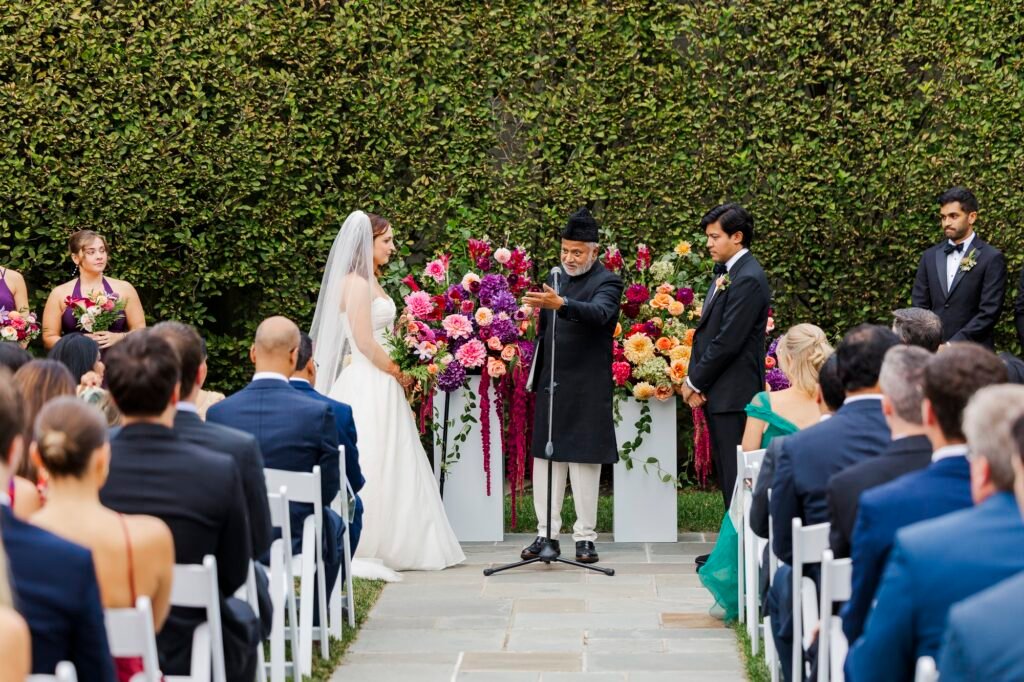
Far less attention is given to what these couples are choosing to build: a relationship in which both people can feel safe, secure, respected, and fully themselves.
Interfaith marriage is not a compromise when commitment means honoring another person without asking them to surrender who they are. It can demand remarkable emotional maturity: the willingness to listen, examine inherited assumptions, and protect a partner’s dignity even when others question their belonging.
Every marriage involves practical compromises. Couples negotiate schedules, spending, responsibilities, and family obligations. The distinction here concerns identity. A shared life need not require the surrender of conscience.
Calling this a higher form of commitment recognizes the depth of responsibility involved in loving across differences. The measure of that commitment is how carefully two people care for each other.
The Person With Whom You Feel Safe and Secure
In discussing his work with couples, Dr. Mike Mohamed Ghouse returns to a simple observation: they see each other as someone with whom they feel safe and secure.
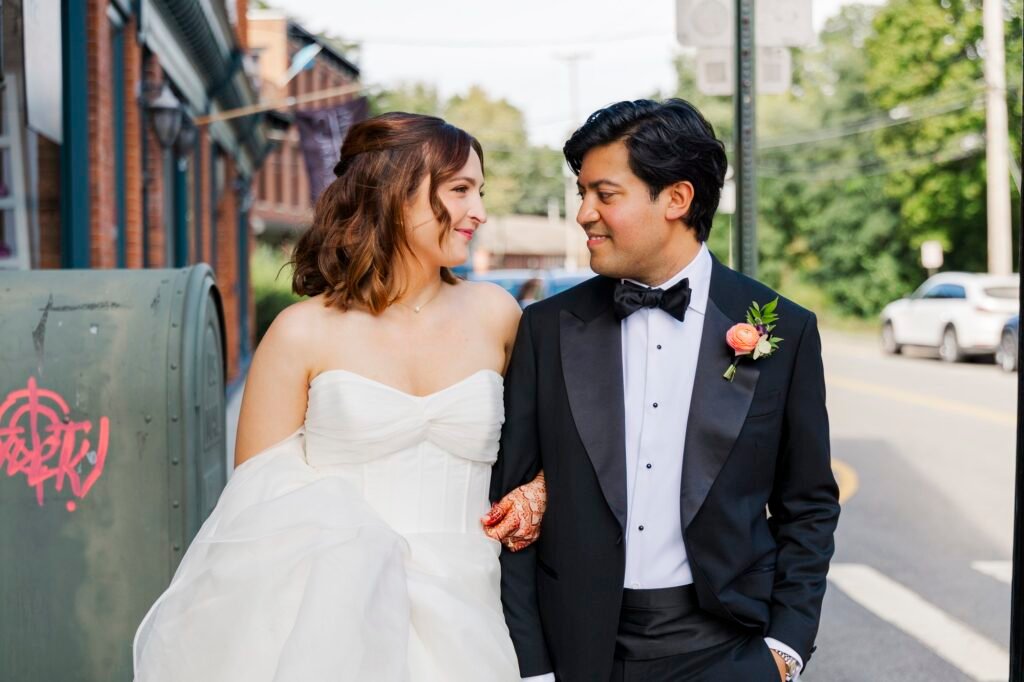
For these couples, he explains, that is the bottom line. Religious, cultural, racial, and ethnic differences remain part of their lives, but the security they find in one another matters more in their decision to marry.
Emotional safety gives those differences room to exist. It allows a person to speak honestly about faith, family, doubt, and belonging without fearing that honesty will cost them the relationship. It allows disagreement without humiliation and closeness without the pressure to become identical.
Having found that connection, the couples want to “give this relationship the color of marriage,” as Dr. Ghouse puts it. The expression captures the moment when a deeply personal bond becomes an acknowledged commitment to a shared life.
This is where he sees the purpose of his work: helping couples realize their dreams, wishes, and goals by creating a marriage ceremony that respects the people they are and the future they hope to build.
Behind each ceremony are two individuals placing trust in each other. Their commitment deserves to be understood through that trust.
A Catholic Groom, a Muslim Bride, and the Question of Conversion
One wedding Dr. Ghouse recalls involved a Brazilian Catholic man and a Lebanese Muslim woman. The bride’s father insisted that the groom convert.
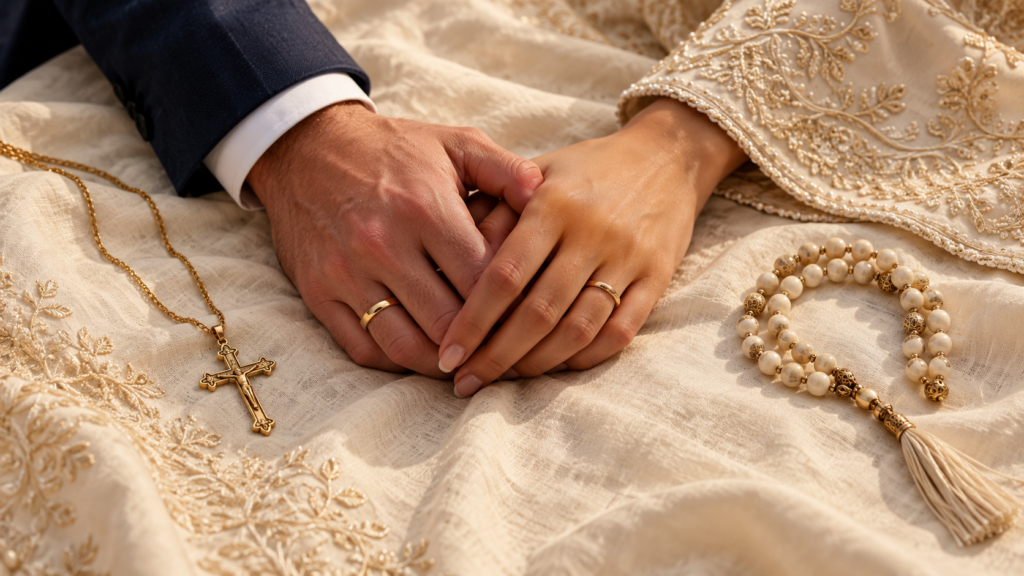
Both partners remained committed to their beliefs. They wanted to marry while retaining their respective faiths.
Dr. Ghouse suggested that the bride approach her father through a connection their traditions already shared: Christianity and Islam belong to the Abrahamic family of faiths. She spoke with her father about accepting her Catholic partner without requiring him to convert.
The groom did not convert. He remained Catholic, and the bride remained Muslim.
The importance of this story lies in the responsibility the couple accepted. They chose a marriage in which religious difference would remain visible, requiring respect and understanding throughout their shared life.
The bride’s conversation with her father also reveals another dimension of commitment. She was willing to speak for her partner’s place in the family while explaining the relationship through language her father could recognize.
Shared Abrahamic heritage became a starting point for that conversation. It did not make their beliefs identical; it offered a connection through which understanding could begin.
For interfaith couples, such conversations can carry profound emotional weight. Faith may hold memories of parents, childhood, worship, community, and conscience. Respecting a partner’s faith means understanding something of what that faith holds for them.
Beyond Two Faiths: A Multicultural Wedding in New York
Another wedding, in New York, brought together several religious traditions and cultural backgrounds within the same extended family.
The groom was Hindu. His mother was Hindu with Sikh heritage and had served as an ambassador. His father was a German Catholic. The bride’s family included Egyptian Muslim and South Korean Christian backgrounds.
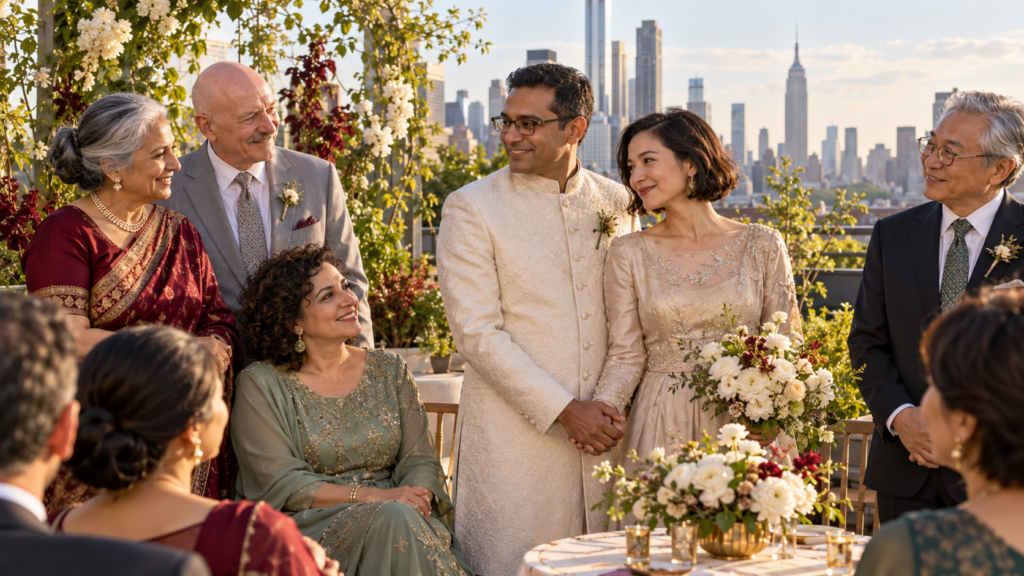
This was a multicultural and multifaith wedding, involving more than the two religious identities a reader might initially expect. It reflected the layered histories that individuals and families bring to a marriage.
Dr. Ghouse was able to bring a touch of the represented traditions into the ceremony. Doing so required attention to what those traditions meant to the couple and their families.
A wedding ceremony can make belonging visible. The choices made within it communicate whose history is acknowledged, whose beliefs receive care, and how the couple wishes to begin their life together.
In this example, the ceremony created space for several traditions within one celebration. The couple’s commitment provided the center around which those different backgrounds could be respectfully represented.

That is pluralism in practice: people building something together while allowing their differences to retain meaning.
When Both Faiths Have a Place: Priyanka Chopra and Nick Jonas
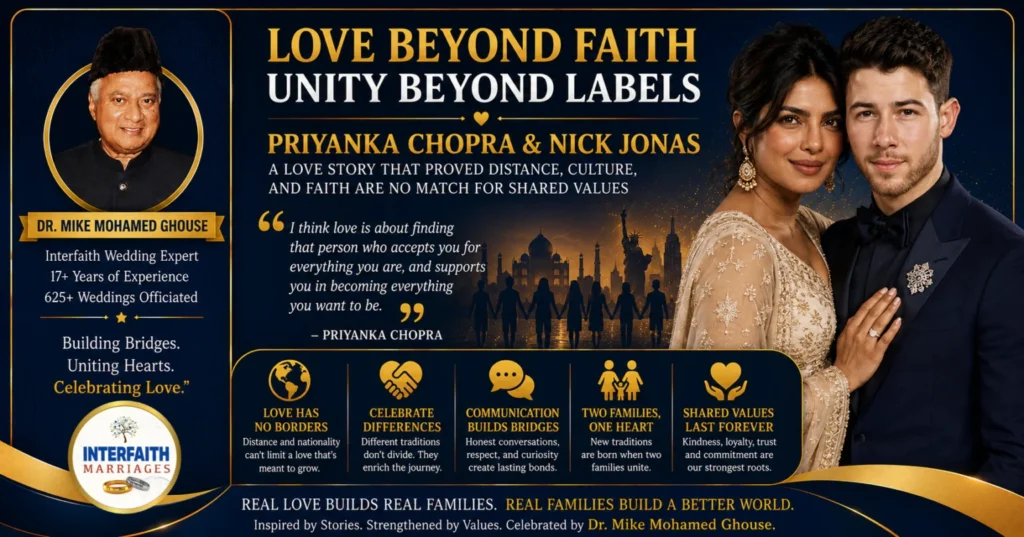
Priyanka Chopra and Nick Jonas offer a memorable example of commitment that makes room for both partners’ traditions. Their 2018 wedding included Hindu and Christian ceremonies, with Jonas’s father officiating the Christian service. The significance goes beyond having two celebrations: both religious backgrounds received a meaningful place at the beginning of their shared life. That choice illustrates the deeper commitment this article describes—the willingness to enter another person’s world with respect while honoring one’s own. Featured among Famous Couples Who Bridged Faiths & Cultures, their example reminds us that unity can grow through the care we give to each other’s differences. A shared future becomes richer when both people’s histories have a place within it.
More Than 650 Weddings, One Couple at a Time
Over 17 years, Dr. Mike Mohamed Ghouse has officiated more than 650 weddings involving couples from 99 ethnicities. His work includes interfaith, intercultural, interracial, civil, secular, Nikah, Nikah Plus, virtual, and destination ceremonies. Further details appear in Interfaith Marriages: Statistics.
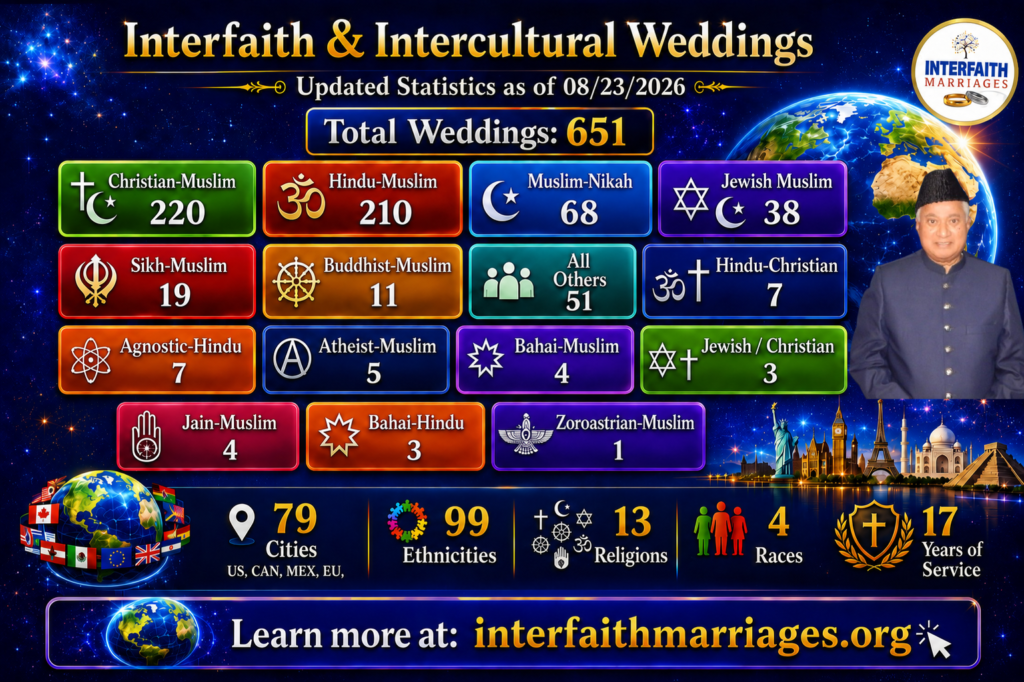
Yet when asked whether a wedding involving so many traditions becomes overwhelming, he describes an approach centered on individual attention. He talks with the couple, listens fully, and treats their wedding as though it were the only wedding he had to perform.
More than 650 weddings of experience; full attention to the couple before him.
A previous ceremony can offer experience, but it cannot tell him what a new couple believes, what their parents fear, or which family tradition matters most to them. Those answers require listening.
This approach also reflects what marriage asks of the partners themselves. Knowing someone well does not remove the need to listen. Their understanding of faith, family, and identity may develop over time. Commitment includes staying curious about the person with whom they share their life.
The Conversations That Give Commitment Its Depth
Interfaith and intercultural couples often need to discuss subjects they cannot safely leave to assumption: children’s religious upbringing, worship, holidays, food practices, family expectations, cultural ceremonies, and the values that will guide their home.

These conversations can be difficult because each subject may carry a deeper question about identity. A discussion about a holiday may also concern whether a parent’s traditions will continue. A disagreement about a ceremony may reflect a fear of being overlooked. A conversation about children may touch both partners’ hopes for the future.
Emotional maturity involves listening for that deeper meaning and making room for both people to explain it.
The practical questions extend across a lifetime. Dr. Ghouse’s guidance has included encouraging couples to discuss potential conflicts, wills, medical powers of attorney, living trusts, and burial wishes. These subjects give commitment a concrete expression: understanding each other’s wishes when decisions are difficult and emotions are high.
No couple resolves every future disagreement before marrying. They can, however, build a habit of speaking honestly, listening carefully, and returning to unresolved questions with patience.
Difference creates a stronger foundation when both people respond to it with that care.
Peace Begins With the Care We Give
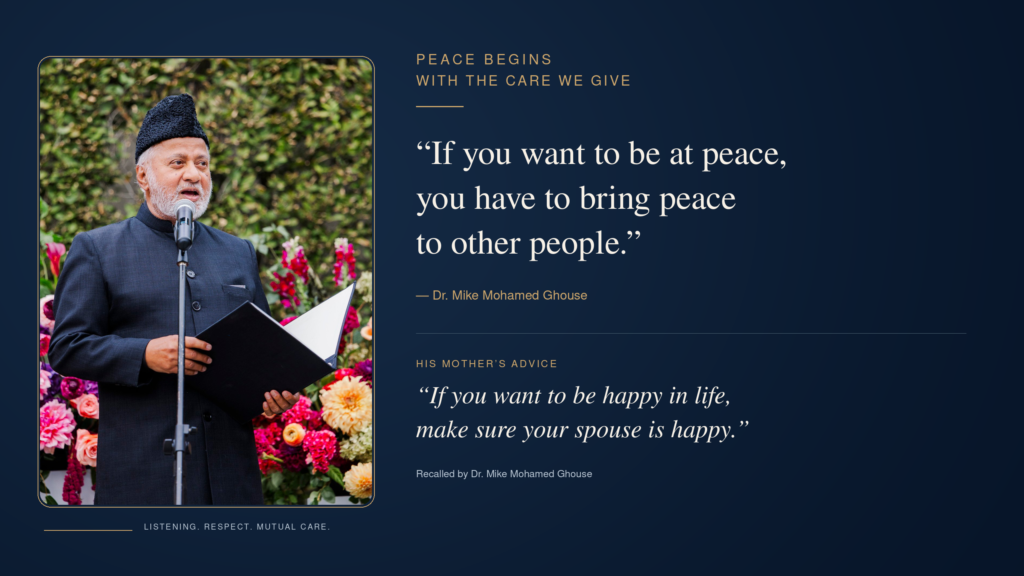
For Dr. Ghouse, the connection between love and peace can be expressed in one sentence:
“If you want to be at peace, you have to bring peace to other people.”
Within marriage, this principle becomes a daily responsibility. Each partner contributes to the emotional life of the home through the way they speak, listen, respond to hurt, and handle disagreement.
Peace grows when a person can express a concern without being mocked, practice their faith without being belittled, and trust that a difficult conversation will still leave room for their dignity.
Dr. Ghouse connects this principle to a personal example, recalling his mother’s advice:
“If you want to be happy in life, make sure your spouse is happy.”
The tenderness of that advice lies in where it directs attention: toward the person with whom one has chosen to share life. Happiness within marriage becomes something both partners help create.
In an interfaith home, that care includes understanding what makes the other person feel spiritually respected and emotionally secure. A familiar prayer, a family celebration, or an important tradition may carry significance that the other partner is still learning to understand.
The willingness to learn becomes an expression of love. Mutual care gives both people a place of belonging.
Religious Wisdom and the Work of Understanding
Different religious traditions offer language through which couples can reflect on this responsibility.

The Quran speaks of humanity being made into peoples and tribes “that you may know one another” (49:13). Read as an ethical invitation, the passage gives difference a purpose: the effort to know and understand another human being.
The familiar words of 1 Corinthians offer another reminder: “Love is patient, love is kind” (13:4).
These teachings speak to qualities a couple can practice: curiosity, patience, kindness, humility, and respect. Learning a partner’s traditions takes time. Listening when those traditions are misunderstood takes patience. Speaking about them with care takes kindness.
For couples who draw strength from faith, these values can help guide the way they live with difference.
“I Don’t Want You to Change Your Faith for Me”
One observation Dr. Ghouse particularly values is the way partners can defend each other’s faith. In describing the weddings he has witnessed, he speaks of brides and grooms who stand up for the beliefs of the person they love.
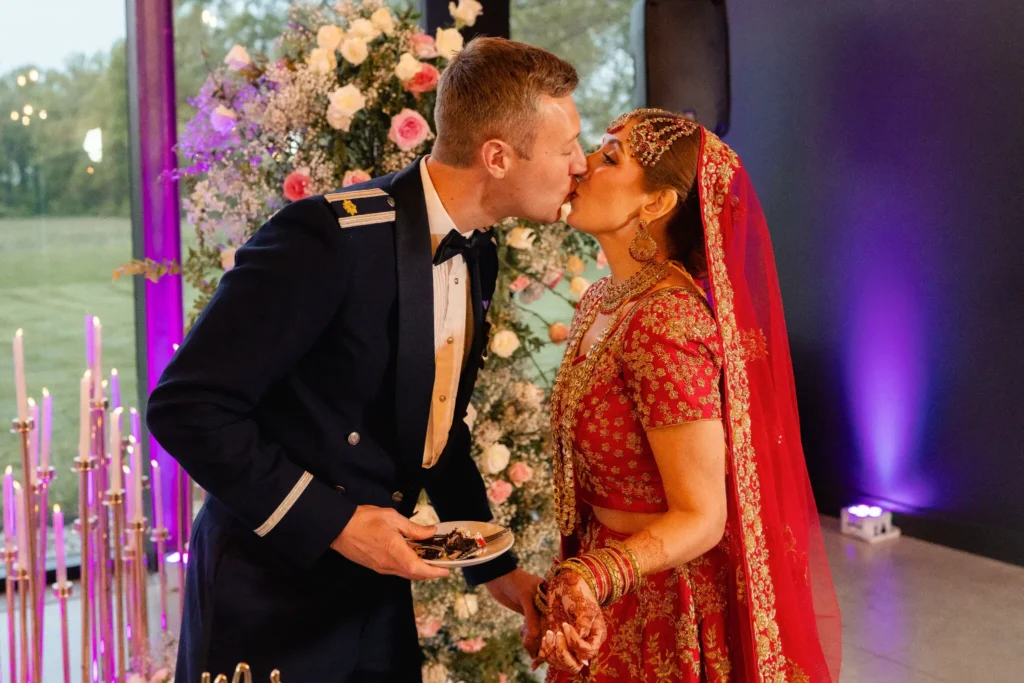
He captures that attitude in a simple line:
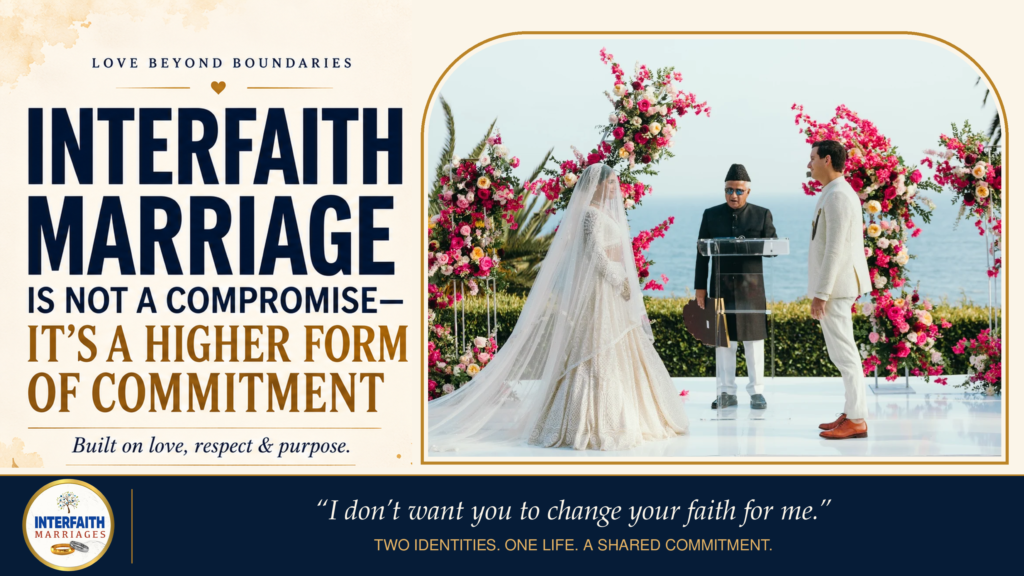
“I don’t want you to change your faith for me.”
The emotional depth of this statement lies in the security it offers. A person’s faith does not become a condition they must negotiate away in order to be loved.
Defending a partner’s faith goes further than allowing it to remain. It means taking its dignity seriously when it is questioned or misunderstood. A partner can recognize the importance of a belief without sharing it, and speak respectfully for the person to whom it belongs.
That is a demanding form of loyalty. It requires a person to examine their own assumptions and, at times, explain the relationship to people whose approval matters to them.
The Brazilian Catholic groom and Lebanese Muslim bride give this principle a concrete expression: both retained their faiths. The New York ceremony gives it another expression: several traditions received acknowledgment within one celebration.
Together, these examples show how commitment can make room for identity and protect it.
Why This Commitment Matters Beyond the Couple
In pluralistic societies such as the United States, a marriage may bring together family histories shaped by different countries, languages, religions, and communities. The New York wedding shows how much of that diversity can exist within a single family.
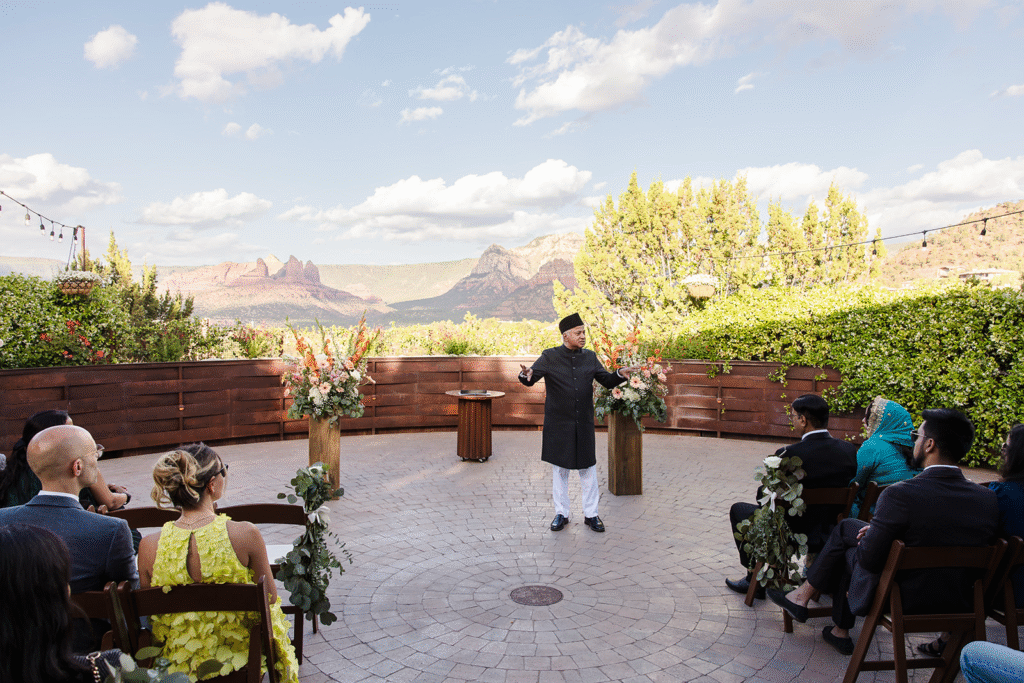
Interfaith and intercultural couples must give those histories a place within everyday life. Their decisions about celebrations, children, relatives, and religious practice turn pluralism into a personal responsibility.
Each respectful conversation offers a small example of how people can live together without demanding sameness. Each effort to defend a partner’s dignity challenges the assumption that difference must make someone less worthy of belonging.
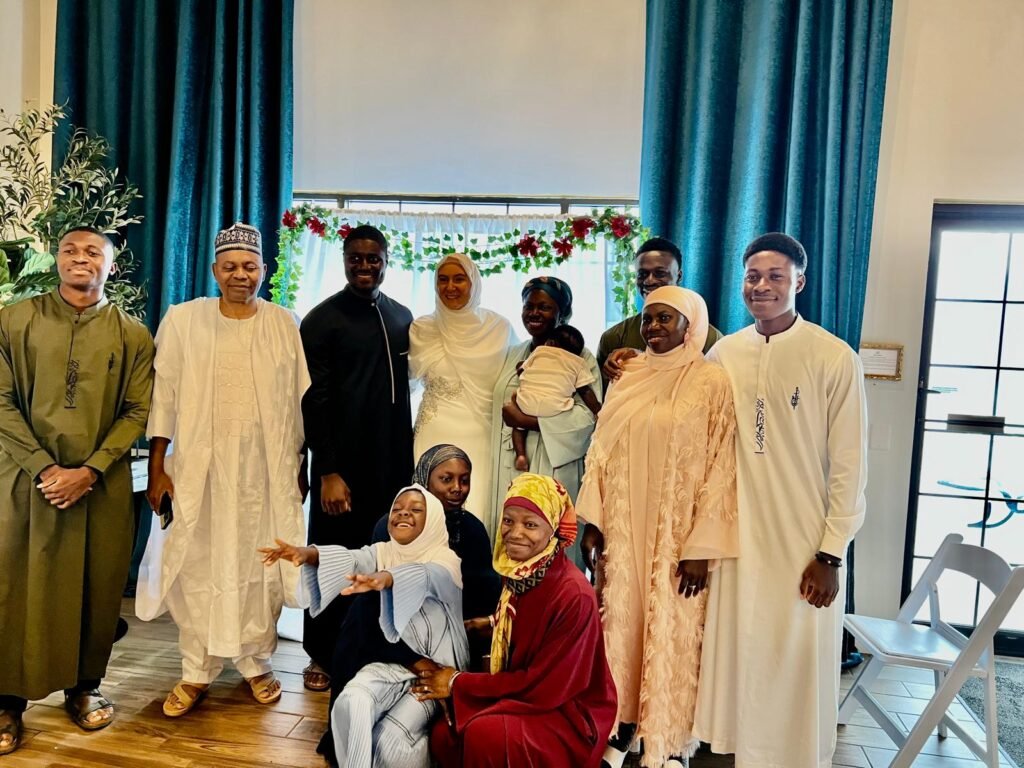
A marriage cannot resolve every social division. It can create a home where people learn that a different tradition deserves to be understood, and where children see respect expressed through ordinary acts of care.
Those acts matter. They give human connection a visible, lived form.
The True Measure of a Strong Relationship
The strength of a marriage becomes visible in how two people treat each other when differences require patience, when family expectations become difficult, and when one partner needs to know that their identity is safe with the other.
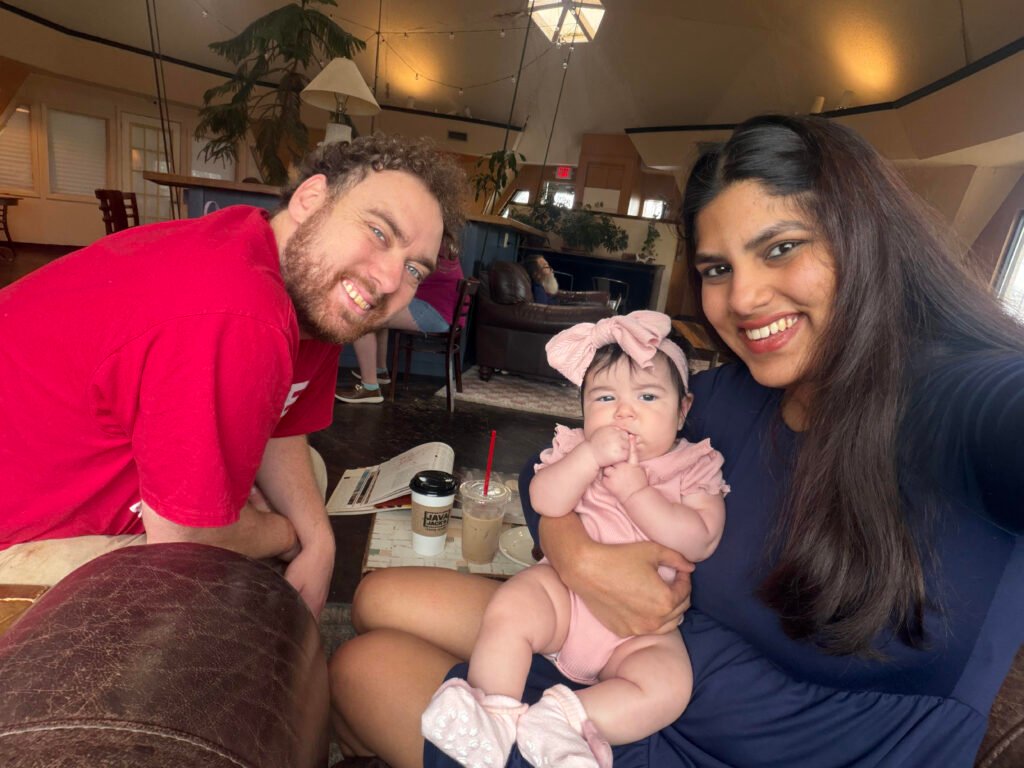
Interfaith marriage can call forth a higher form of commitment through precisely these responsibilities: learning deliberately, listening deeply, honoring conscience, and helping another person feel at peace.
The couples Dr. Ghouse describes have found someone with whom they feel safe and secure. They want to give that relationship the color of marriage. His work helps them bring those dreams, wishes, and goals into a ceremony that acknowledges their shared future.
The lasting work belongs to the couple, in the life they build after the ceremony: the conversations they keep having, the dignity they keep protecting, and the happiness they help make possible for each other.
Love across faiths asks for the courage to let another person belong fully to the marriage, to their own conscience, and to the life both partners are choosing together.
Frequently Asked Questions
Explore FAQs: FAQs Interfaith and Multicultural Wedding Ceremonies
What is an interfaith marriage?
An interfaith marriage is a marriage between people from different religious backgrounds or belief systems. An intercultural marriage involves different cultural backgrounds; a couple may be both interfaith and intercultural.
Does an interfaith marriage require one partner to convert?
Conversion is not inherent in the meaning of interfaith marriage. Couples and religious communities have different expectations. In the Brazilian Catholic–Lebanese Muslim example described here, both partners retained their faiths and the groom did not convert.
Can interfaith marriages be successful?
Yes. Interfaith couples can build fulfilling marriages through shared values, mutual respect, honest communication, and thoughtful decisions about family life. Different beliefs require care, just as other important differences within a relationship do.
What should interfaith couples discuss before marriage?
Important subjects include religious practice, family expectations, children’s upbringing, holidays, cultural traditions, boundaries, and long-term wishes. Partners should explain what matters to them and how they hope to honor each other’s needs.
Can one wedding include more than two faith traditions?
Yes. A multicultural and multifaith wedding can acknowledge several traditions represented within the couple’s extended families. The New York wedding described here is one example of this approach.
Why describe interfaith marriage as a higher form of commitment?
The phrase recognizes the deliberate work of understanding and honoring a partner across religious and cultural differences. It describes a depth of responsibility and care, rather than promising that every interfaith marriage will succeed.
About the Officiant
Dr. Mike Mohamed Ghouse has officiated 650+ weddings involving couples from 99 ethnicities, including interfaith, intercultural, interracial, civil, secular, Muslim Nikah, Nikah Plus, destination, and virtual ceremonies. He helps couples navigate love, identity, family expectations, and cultural differences through attentive listening and a pluralistic approach to marriage.
Dr. Ghouse is the President and founder of the Center for Pluralism and director of the World Muslim Congress. He is an Interfaith Wedding Officiant for InterfaithMarriages.org and a Muslim Wedding Officiant. He is a Muslim, Pluralist, activist, speaker, author, and social scientist. He is also a member and supporter of Muslims for Progressive Values (MPVUSA). More on Google
Further Reading About Dr. Mike Mohamed Ghouse
1. New York Times on a Wedding Officiated by Mike Ghouse: on a wedding I officiated
2. Mr. Pluralist of America – Mr. Pluralist of America
3. A Heart that connects – A Lamp that connects hearts
4. Mission Accomplished – Mission Accomplished Dallas-Washington-Dallas
5. Background of Mike Ghouse Background of Mike Ghouse
6. America’s New Frontier: America’s new frontier for the next 250 years
7. More at https://interfaithmarriages.org/about-mike-ghouse/